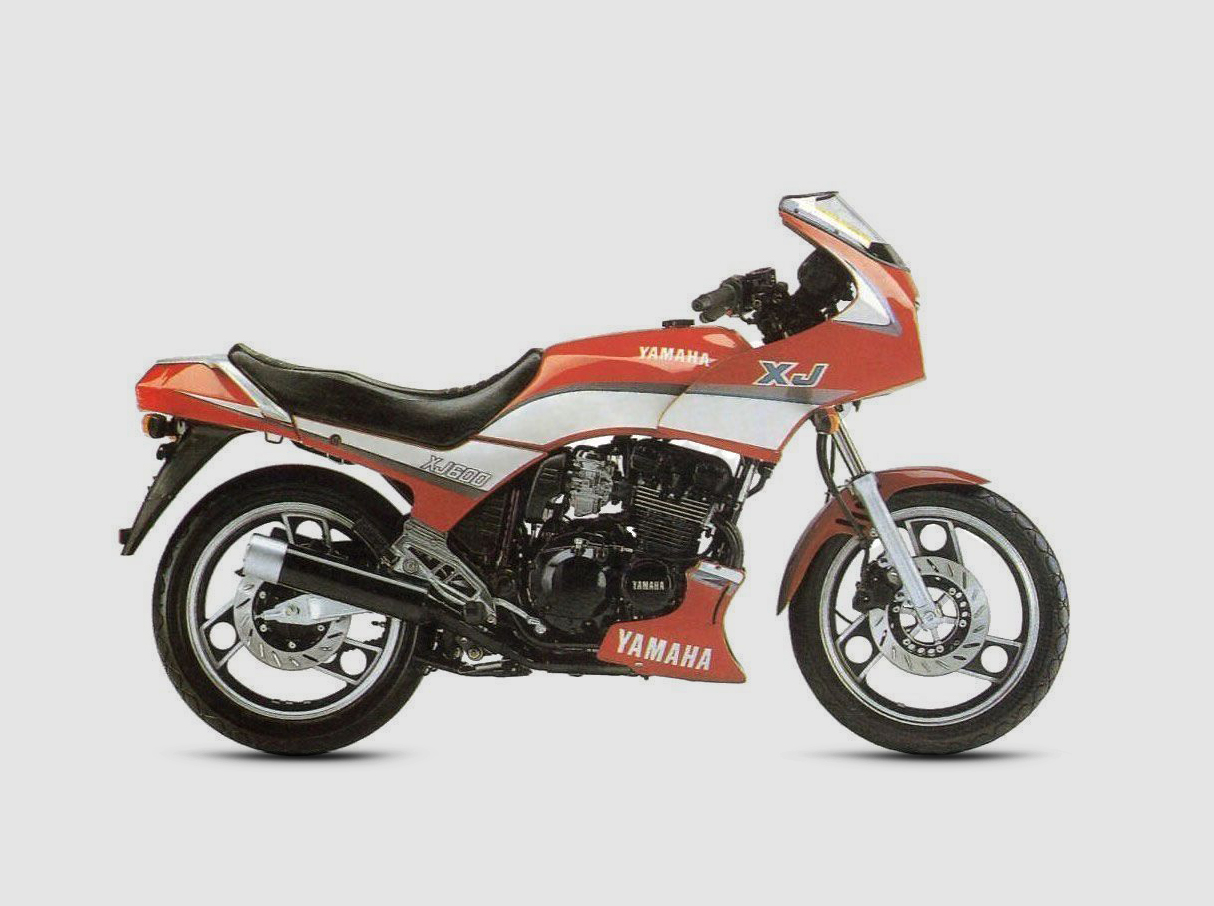
Original Yamaha XJ600
The 1984 Yamaha XJ600 was notable for being the first Japanese inline-4 motorcycles with a displacement of 600cc. They were also one of the first inline-4 motorcycles to use mono-shock rear suspension that contemporary motorcycle use.
Next Generation Tech
The Yamaha XJ600e is a design study about sustainable electric two wheeled vehicle
During trips back and forth to China since 2014 I have witnessed the growth of the Chinese electric motorcycle industry. This cannot go without comment when describing the background of the project.
China’s ground-up approach took human powered and traditional Internal Combustion (IC) bikes and retrofitted them with simple hub motor battery set-ups to underpin part of their vehicular sustainability efforts at a small and large scale.
The eCUB from Shanghai Customs and the Urban Series from Evoke Motorcycles seem to be typical of this activity from my observations.
Thinking locally, personal reflections about the state of affairs in the UK – where we are yet to fully engage with electric motorbikes – raised the question: ‘How would we handle a ground-up approach in the UK?’
This question in mind the XJ600e motorbike was initiated as a research design project. One of the outputs is a demonstrator that aimed to investigate this question through the process of building a motorcycle using a similar model to that used in China, while aiming to consider the current and potential marketplace and users within the UK who have different requirements.
Next Generation Customer
Interim preliminary research that I have conducted about ‘what people want from electric motorcycles’ and a survey of over 400 riders with the Centre for Future Transport and Cities’ National Transport Design Centre, with the kind help of the MotorCycle Industry Association, indicated a few things that served as underpinning principals for our concept of the electric motorcycle demonstrator.
1/ There is a decline in IC motorcycle sales and the new generation (sometimes linked with this decline) seem uninterested in current offerings of the marketplace. However, they have a large interest in smaller and sustainable vehicles.
2/ They have new values, ethics, and requirements because of their age, financial situation, and the environmentally conscious world that they have had to grow up in.
3/ They have a high focus on aesthetics. In terms of style, an understanding that UK consumers have high aesthetic values means that the demonstrator needs to be produced like a well-considered and designed product rather than a collection of parts fused together in a workshop.
Sustainable Focus
With an eye on these points, I have proposed a retro-fitted electric design re-using our registered 1991 Yamaha XJ600 motorbike with a focus on a sustainable circular design philosophy to give the vehicle a second life at a price that would be cheaper than a new vehicle, in recognition of the fact that many new generation riders will have lifetime debt.
This bike was chosen sheerly because of availability. Often with 2nd life products there is limited choice of products so this project is a good simulation of a realistic situation.
The frame, forks, yolks, swingarm, caliper cases, wheels and shocks were all reconditioned or maintained to make a sound mechanical chassis.
Only worn or outdated parts such as tyres, bushes, lights, bearings, brakes systems, bolts and oil seals were replaced with new parts to ensure safety.
Sustainable powertrain
No gasoline, No oil, just clean ol’ electric. It is common knowledge that there is an environmental impact in producing lithium battery. To overcome this, the propulsion system is second life so environmental deficit is much less. Many used batteries are still good to use in designs that require less capacity and power, and this was the case with the Nissan Leaf lithium nickel cobalt manganese oxide (NMC) cells used in the XJ600e, these cells had a 94% state of health when bought.
The prototype uses three of the NMC double module connected in series to provide a safe low voltage 48v power source. With an on-board 20A charger, two and a half hours will get the bike up to full charge to run the 8kw (12kw peak) rear hub motor to 50-60mph.
 An electrifying life on two wheels...